
 |
 |
|
|
|
 |

- Almond Carrier Oil
- Apricot Carrier Oil
- Aloevera Carrier Oil
- Avocado Essential Oil
- Ajwain Essential Oil
- Basil Essential Oil
- Bergamot Oil
- Cinnamon Essential Oil
- Clove Essential Oil
- Cardamom Essential Oil
- Clary Sage Essential Oil
- Chamomile Essential Oil
- Carrot Seed Essential Oil
- Camphor Essential Oil
- Cypress Essential Oil
- Citronella Essential Oil
- Citronella Essential Oil
- Cumin Oil
- Cedarwood Essential Oil
- Dill Seed Oil
- Eucalyptus Essential Oil
- Fennel Essential Oil
- Geranium Essential Oil
- Grapefruit Essential Oil
- GreenTea Absolute Oil
- GrapeSeed Carrier Oil
- Grapefruit Essential Oil
- Ginger Oil
- Holy Basil Oil
- Juniper Essential Oil
- Jojoba Essential Oil
- Jasmine Essential Oil
- Jojoba Carrier Oil
- Juniper Essential Oil
- Lime Essential Oil
- Lavender Essential Oil
- Lemon Grass Oil
- Lemon Oil
- Mandarin Essential Oil
- Neem Essential Oil
- Neroli Essential Oil
- Nutmeg Essential Oil
- Orange Essential Oil
- Patchouli Essential Oil
- Palmarosa Essential Oil
- Peppermint Essential Oil
- Peppermint Oil
- Pine Oil
- Rose Mary Essential Oil
- RoseWood Essential Oil
- Sandalwood Essential Oil
- Spearmint Oil
- Spikenard Oil
- Tea Tree Essential Oil
- Tagetes Oil
- Vetivert (KHUS) Essential Oil
- Walnut Carrier Oil
- Ylang Ylang Essential Oil

Home »
Our Products » Aromatherapy
Aromatherapy
Aromatherapy, also referred to as Essential Oil
therapy, can be defined as the art and science of utilizing naturally
extracted aromatic essences from plants to balance, harmonize and
promote the health of body, mind and spirit.
Rose Mary Essential Oil
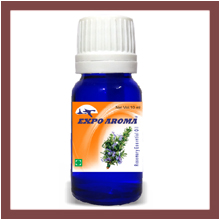 |
This crisp and clean smelling essential oil is
great for stimulating the brain, improving memory and mental clarity,
while helping with a variety of congested respiratory tract problems,
stiff muscles, coldness as well as boosting the liver and gall bladder.
It is also used for improving hair and scalp health.
Oil Properties
Rosemary oil has a clear, powerful refreshing herbal smell, is clear in color and watery in viscosity.
Origin of rosemary oil
it is a shrubby evergreen bush that grows up to 1.5 meters (4 feet) high with green-gray needle-shaped leaves and pale blue/lilac flowers that bees just love and is originally from Asia, but is now cultivated in France, Tunisia and Yugoslavia.
The name is derived from the Latin 'Rosmarinus' or 'sea dew', as it is rather fond of water. The Egyptians, Hebrews, Greeks and Romans considered the herb as sacred and even in the Middle Ages it was used to ward off evils spirits and used as a protection against the plague.
Uses
Rosemary oil has a pronounced action on the brain and the central nervous system and is wonderful for clearing the mind and mental awareness, while having excellent brain stimulant properties, as well as improving memory.
It helps with headaches, migraines, neuralgia, mental fatigue and nervous exhaustion and the antiseptic action of rosemary oil is especially suitable for intestinal infections and diarrhea, easing colitis, dyspepsia, flatulence, hepatic disorders and jaundice and relieving pain associated with rheumatism, arthritis, muscular pain and gout. It also helps for arteriosclerosis, palpitations, poor circulation and varicose veins.
The diuretic properties of rosemary oil are useful with reducing water retention during menstruation, and also with obesity and cellulite. On the respiratory system, it is effective for asthma, bronchitis, catarrh, sinus and whooping cough. Because of its astringent action, it is also effective for countering sagging skin. Its stimulating action benefits scalp disorders and encourages hair growth.
On the skin, it helps to ease congestion, puffiness and swelling and can also be used for acne, dermatitis and eczema, but a very popular use of this oil is the use in hair care products, as it has a pronounced positive effect on the health of the hair and scalp. It increases the circulation to the scalp and is therefore also effective for promoting hair growth.
Oil Properties
Rosemary oil has a clear, powerful refreshing herbal smell, is clear in color and watery in viscosity.
Origin of rosemary oil
it is a shrubby evergreen bush that grows up to 1.5 meters (4 feet) high with green-gray needle-shaped leaves and pale blue/lilac flowers that bees just love and is originally from Asia, but is now cultivated in France, Tunisia and Yugoslavia.
The name is derived from the Latin 'Rosmarinus' or 'sea dew', as it is rather fond of water. The Egyptians, Hebrews, Greeks and Romans considered the herb as sacred and even in the Middle Ages it was used to ward off evils spirits and used as a protection against the plague.
Uses
Rosemary oil has a pronounced action on the brain and the central nervous system and is wonderful for clearing the mind and mental awareness, while having excellent brain stimulant properties, as well as improving memory.
It helps with headaches, migraines, neuralgia, mental fatigue and nervous exhaustion and the antiseptic action of rosemary oil is especially suitable for intestinal infections and diarrhea, easing colitis, dyspepsia, flatulence, hepatic disorders and jaundice and relieving pain associated with rheumatism, arthritis, muscular pain and gout. It also helps for arteriosclerosis, palpitations, poor circulation and varicose veins.
The diuretic properties of rosemary oil are useful with reducing water retention during menstruation, and also with obesity and cellulite. On the respiratory system, it is effective for asthma, bronchitis, catarrh, sinus and whooping cough. Because of its astringent action, it is also effective for countering sagging skin. Its stimulating action benefits scalp disorders and encourages hair growth.
On the skin, it helps to ease congestion, puffiness and swelling and can also be used for acne, dermatitis and eczema, but a very popular use of this oil is the use in hair care products, as it has a pronounced positive effect on the health of the hair and scalp. It increases the circulation to the scalp and is therefore also effective for promoting hair growth.
Jojoba Essential Oil
 |
Jojoba is a highly penetrative, very
protective oil with excellent softening and moisturising properties,
recommended for all skin types but particularly for the treatment of
dry, mature or hardened skin. It can also be used as a treatment for dry
hair, and helps to condition the scalp.
Since it is composed of wax esters, it is an extremely stable substance and does not easily deteriorate and the structure closely resembles that of your own skin sebum, making it an excellent moisturizer and ideal for all skin types.
When used as a massage medium, it acts as an emulsifier with the skin's natural sebum and gently unclogs the pores and lifts grime and imbedded impurities.
It contains myristic acid which also has anti-inflammatory actions and since it has a similar in composition to that of the skin's own oils, it is quickly absorbed and is excellent for dry and mature skins as well as inflamed conditions.
If a good nourishing ingredient is needed for hair care, jojoba oil is also sometimes added to commercial hair care products, but due to the cost of jojoba oil, the quantities so included are low.
It can in most cases be used on acne skin without any problems as it helps to control acne, it is also an antioxidant - so the oil does not become rancid and can prevent rancidity in other oils. It can be used pure in massage, or can be mixed with other carrier oils.
Since it is composed of wax esters, it is an extremely stable substance and does not easily deteriorate and the structure closely resembles that of your own skin sebum, making it an excellent moisturizer and ideal for all skin types.
When used as a massage medium, it acts as an emulsifier with the skin's natural sebum and gently unclogs the pores and lifts grime and imbedded impurities.
It contains myristic acid which also has anti-inflammatory actions and since it has a similar in composition to that of the skin's own oils, it is quickly absorbed and is excellent for dry and mature skins as well as inflamed conditions.
If a good nourishing ingredient is needed for hair care, jojoba oil is also sometimes added to commercial hair care products, but due to the cost of jojoba oil, the quantities so included are low.
It can in most cases be used on acne skin without any problems as it helps to control acne, it is also an antioxidant - so the oil does not become rancid and can prevent rancidity in other oils. It can be used pure in massage, or can be mixed with other carrier oils.
Lime Essential Oil
|
Clear smelling citrus Lime oil can help lift
depression and lighten your mood when feeling blue. It is used to fight
cellulite and to tone the skin in general.
Oil Properties
Lime oil has a sharp, citrus peel smell and is pale yellow to light olive in color.
Origin of lime oil
Originally from Asia, it is now cultivated in most warm countries, especially Italy, the West Indies and the Americas. It is an evergreen tree growing up to 4.5 meters (15 feet) high with smooth, green leaves, stiff sharp spines and small, white flowers.
The fruit is green and although there are many varieties they usually measure about two inches in diameter. It was introduced into Europe by the Moors and from there it migrated to the Americas. Ships transporting it were called 'lime juicers' and ship crews depended on it to prevent scurvy, because of the high vitamin C content. It is used to flavor ginger ale and cola drinks, and also used in the perfume industry.
Uses
Lime oil is useful to cool fevers associated with colds, sore throats and flu and aids the immune system while easing coughs, bronchitis and sinusitis, as well as helping asthma. Lime oil can stimulate and refresh a tired mind and helps with depression.
It can be helpful for arthritis, rheumatism and poor circulation, as well as for obesity and cellulite and has an astringent and toning action to clear oily skin and acne, and also helps with herpes, insect bites and cuts.
Oil Properties
Lime oil has a sharp, citrus peel smell and is pale yellow to light olive in color.
Origin of lime oil
Originally from Asia, it is now cultivated in most warm countries, especially Italy, the West Indies and the Americas. It is an evergreen tree growing up to 4.5 meters (15 feet) high with smooth, green leaves, stiff sharp spines and small, white flowers.
The fruit is green and although there are many varieties they usually measure about two inches in diameter. It was introduced into Europe by the Moors and from there it migrated to the Americas. Ships transporting it were called 'lime juicers' and ship crews depended on it to prevent scurvy, because of the high vitamin C content. It is used to flavor ginger ale and cola drinks, and also used in the perfume industry.
Uses
Lime oil is useful to cool fevers associated with colds, sore throats and flu and aids the immune system while easing coughs, bronchitis and sinusitis, as well as helping asthma. Lime oil can stimulate and refresh a tired mind and helps with depression.
It can be helpful for arthritis, rheumatism and poor circulation, as well as for obesity and cellulite and has an astringent and toning action to clear oily skin and acne, and also helps with herpes, insect bites and cuts.